Showing posts with label salmone atlantico. Show all posts

Sunday, 3 July 2016

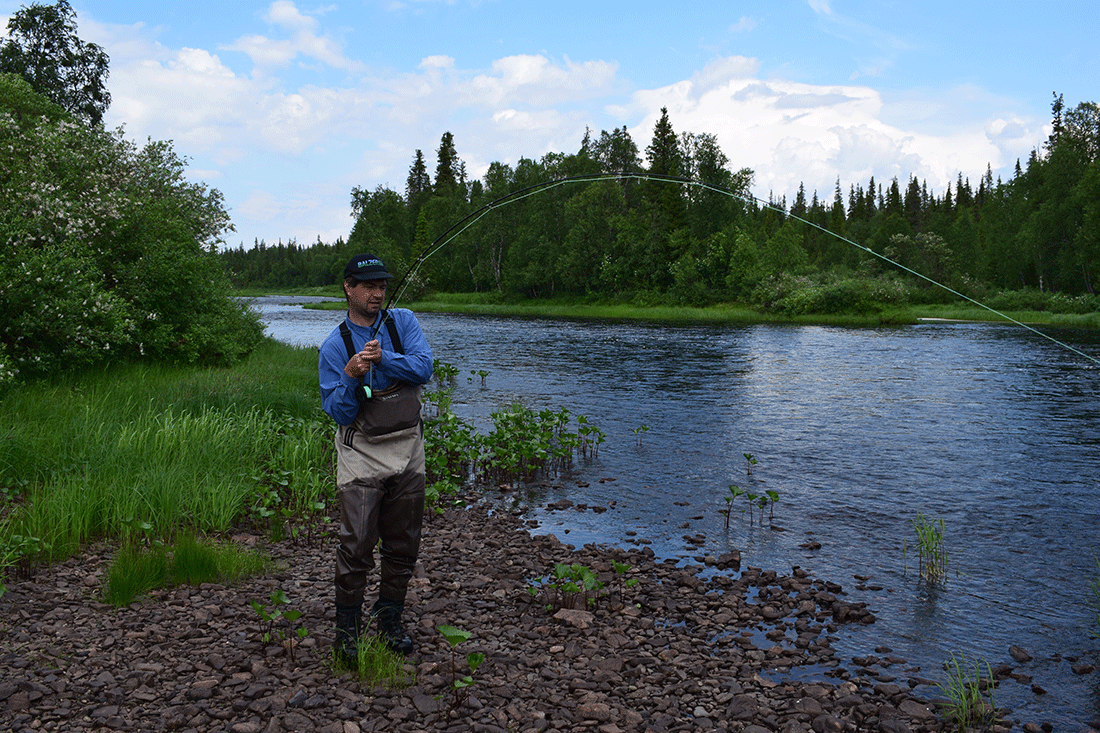
Chavanga guides. The first is Jeorge. NEW!!!!!! The second - Vasil Junior


Our NEW Chavanga web page and NEW Blog


                                    https://www.chavanga.com/   

                         https://www.chavanga.com/blog

Vasil Bykau


          Jeorge, 
great and terrible, 
one week on the river, 
fishing techniques demonstration, 
and only one fly he use this season.

https://www.facebook.com/chavanga/
http://chavanga.com/home


His advantages:
1. He reads the river well
2. He knows where the fish is
3. He knows where to put angler
4. He can show how to catch in any situation
5. He is attentive and benevolent
6. He is in good physical shape for any job

His disadvantages:
1. He likes to sleep in the morning
2. and so on....


df 


Vasil Junior

Basil
great but not so terrible,


https://www.facebook.com/chavanga/
http://chavanga.com/home


His advantages:
1. He reads the river well
2. He knows where the fish is
3. He knows where to put angler
4. He can show how to fish
5. He is attentive and benevolent
6. He is in good physical shape for any job
7 . He wants to learn and know all about salmon

His disadvantages:
1. He likes to sleep in the morning
2. and so on ....

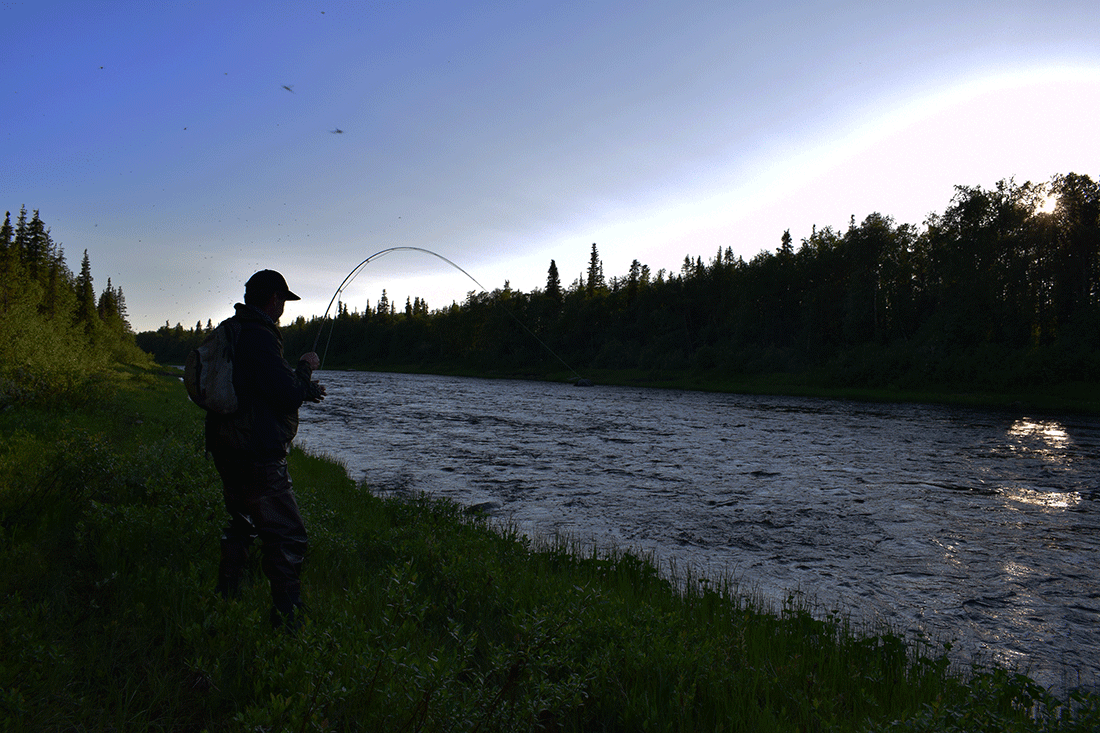
some pics of June


Friday, 4 April 2014

Spring salmon fishing on the rivers of Kola Peninsula.


Part 1

Salmon season  on rivers Chavanga, Strelna and Varzuga begins in May. This period is characterized by high water levels in rivers, cold water and big quantity  of fish. With the increase of water temperature of 6-8 C   salmon becomes active and reacts to artificial flies. Therefore, for many anglers last May - first June weeks are the best start to the season.

The problem is that spring comes every time another. Therefore, the situation on the river almost never repeated. Keep in mind that the simplest combination of temperature and water level is complicated because we have to take into account a host of other factors. One of the most important is the dynamics of these factors. For example, the high temperature of 18-20 degrees is not a threat to the activity of the fish. But if the temperature is increased in a few days, then it will lead to a significant decrease in activity.
This is the case in the spring, a sharp change in transparency, water level and temperature decreases   fish activity. A very important factor is the state of the rivers in the winter. Especially dangerous are  hard frost  and  freezing of the  rivers. Drastically reduces the number of suitable sites for salmon. A considerable part of the fish may die under the ice.. The transition from winter to spring is often strongly influenced on    spring fishing. The rapid melting of snow and ice leads to a very intense lifting and movement of water and  ice. Traffic jams of ice, which is deprived of the salmon sites. Part of the fish is killed by  stormy spring break.

For these reasons, the behavior of salmon in the new season may significantly differ from the picture that we remember from last year. The fish can be different in temperament, others positions  in the river, and a completely different reaction to our flies. Therefore, our last year's technique, fly, which we had placed so much hope, work is not as good as last year. Every year we have to try to understand what has changed in the river, what factors were decisive for the behavior of salmon. Then we have a chance to choose the right tactics for fishing, identify promising places to find the best equipment and gear.


  Part 2


The main problem that we face in the spring - is a high water level. In a large volume of water is difficult to navigate and find parking salmon. The river changes its nature, salmon chooses way to go up the river and places to stay  that are not obvious to us  .  Most often we have to use tackles  that   can bring  our  fly closer to the bottom. Here there are four choices,1.  use a heavy line (leader) and a heavy fly -.2.  use only   heavy line,3.  use a heavy fly on a floating line 4.  and use special techniques presentations that allow you to omit the fly sink. The correct choice between these options or the right combination determines the success of catching salmon. Given my own experience, I would suggest using a normal fly on a sinking line for use in such areas of the river where we can not confidently know   where salmons are staying.  . In this case, we have to present the fly over a wide area. This option is suitable for fishing on the broad reach, it allows you to quickly test a large area. Sometimes we find a good place in which salmon attack one after the other. With high water levels cause accumulation of fish in a certain place is not clear to us. But in the summer, we often find in this place - for example - a few individual stones that served as a hiding place for salmon in the spring.  If we know in advance about the existence of such anomalies at the bottom, we can greatly narrow down your search and do not waste time fishing in unpromising places of the river. This is the right place to apply the floating line  and heavy flies. Floating line  facilitates casting and management of fly, and weight allows it to fly down towards the bottom. In this situation, we do not need to check   large area, we can focus on fishing in a particular location. If we can apply the casting upstream or casting slack line, we will be able to   deep  the fly to the desired location. Mending of varying intensity is very useful  to achieve the same goal. If you use the   upstream  mending  - fly reduces the speed downstream and an added opportunity to dive deeper. If we do Mending downstream, we make fly to move  across with increasing speed. This technique can cause salmon, but more often it is suitable for the first version, in which we have to handle a large area.


Part 3.

  High and cold water, season beginning, end of May – early June.

Location 1

Fishing at the  very deep places , large depth, big volume of the water,  the main stream, under rapids holes , deep plum.
Bottom  fishing by fast sinking line and large  heavy flies.
Flies -  2-inch copper tubes, Waddington and other heavy body, wing length  up to 10-12cm.
Colors are mostly bright, contrast, in the wing of a combination of red, yellow, black with bright elements on the body flies.

Location 2
  Slow, not a very deep pools, clamps along the river, small holes where salmon stays for rest.
Fishing near   the bottom,  sinking line  and flies   0.75-1.5 inch brass tubes, Waddington and other bodies  are not very heavy, wing length up to 8 cm.
Bright enough,   wing -  combination of red, yellow, green, black.


The very beginning of the summer, the water is still high and cold, but becomes brighter and the level falls.  First weeks of June.

Location 1
The same  deep places , large depth,   bottom  fishing by fast sinking line  at the main stream, under rapids holes , deep plum.
Flies -  0.75-1.5 inch copper tubes, Waddington and other major carriers, wing length up to 8 cm.
Bright enough,   wing -  combination of red, yellow, green, blue, black with bright elements on the body flies.

Location 2
  Slow, not a very deep pools, clamps along the river, small holes, fishing near   the bottom,  sinking line.  
Flies   0.75-1-inch brass tube, Waddington and others not the heavy  carriers  and single hooks № 2-4, wing length up to  6 cm.
The wing is dark, but with bright elements, too bright elements on the body flies.


Summer takes effect, light and water drops, warm up to 10-12 degrees.

Location 1
Deep places near the main stream,  large depth,  under rapids holes , deep plum,   means bottom  fishing by fast sinking line.   
Flies   0.5-1-inch brass tube, Waddington and others carriers,  double and single hooks № 2-4-6, wing length  5 cm.
The wing is mostly dark and bright elements on the body flies.

Location 2
In a  slow, not deep water we use  undersurface  fly on a intermediate line.   
Flies   0.5-0.75 inch brass or aluminum tubes and other light carriers, single and double hooks № 4-6, wing length and 5 cm .Wing dark, bright elements on the body flies.


Tuesday, 22 October 2013

Salmon fishing in a cold water. Chavanga autumn 2013. Part 3

       Our NEW Chavanga web page and NEW Blog

                                    https://www.chavanga.com/   

                         https://www.chavanga.com/blog

Vasil Bykau


Part 3. 

 In the second week of October was intense rain . The water level in the river rose  for the first time in 3 months. But the temperature continued to drop and reached 4 degrees.Perhaps this is due to the continuing decline in fish activity. The number of sea salmons in the river rise . Their  movement up the river becomes so intense that fish are often hurt the fishing line during his jumps. At this time , it became clear that the fish   almost non-stop goes up the river. Salmon ceased to show any signs of aggressiveness and surface activity . Fly sunray shadow and its tactics - fast provoking strips could be postponed until next year.
Now coming to the fore other problems. Salmon in the river was a lot, and we had no issues with its localization. We had to leave parts of the river with a swift current . Bite into the mainstream with the most profound and rapid flow virtually ceased. The exceptions were the direct inputs into the pits , just few meters , the first step down . Given that fishing was still very local , it was necessary to apply the weighted flies -  on a metal tube , for example. Was effective method using Slack castes. Within 3-4 seconds  fly sink down close to the bottom . Then stretch the line, stop fly with its slow ascent to the surface. This "nymph" reception  caught considerable number of salmon . Of course , the technique is quite difficult in a turbulent flow . But for some skill and luck , the fish react to the movement of flies .
With the low activity of salmon had to change the selection criteria flies . Fly lost in size, but has gained some weight. In place of bright orange and red elements come only trigger points of the jungle cock feathers and (or ) orange tip , but more often green tag -but. You could leave a long black wing with flash , but make it very delicate and subtle. A half-inch or better yet a short and thin tube of gold or silver (depending on light) proved to be suitable for the tying of flies bodies  .
By mid-October, the state of the river has changed. The water level has remained the same , the transparency of its decreased slightly after a very windy and cold days . But maybe the impression formed by cloudy weather . Thermometer still showed 4 degrees .   Salmon activity continued to decline. It was difficult to identify any patterns in salmon  reaction to certain flies or  fly prezentation   in the water. Perhaps the right tactic was a long wait in a promising position. It was possible to minimize the loss of time walking and searching for fish. Salmon rose steadily up the river. It was possible to take an advantageous position and keep the fly in the place which is held each fish . Of course , this activity is monotonous and boring . But this method have been caught   the last salmon    2013 season in Russia on the River Chavan'ga.


Monday, 21 October 2013

Salmon fishing in a cold water. Chavanga autumn 2013. Part 2

       Our NEW Chavanga web page and NEW Blog

                                    https://www.chavanga.com/   

                         https://www.chavanga.com/blog

Vasil Bykau


October salmon fishing at the Kola peninsula.

Part 2  


These problems become critical within the next days. With the stabilized level of water the water temperature has   a tendency to lower . After a night frost water has cooled to 6 degrees. It was noticeable that the salmon became harder to enter the river from the sea. Leaping salmon became visible around the lower portion of the river.

At the same time , it became apparent that in areas with fast flowing salmon flies become conventional to ignore when I  present it  near the surface. Perhaps the fish became less active and preferred to stay near the bottom. It is possible that some of it has to prefer areas with more calm and deep water. On this one might have thought , watching the cluster of fish jumping on the broad and deep places below the falls.

In this case, the most successful was the way to catch a salmon by  provocation    with fast motion flies  . Quick presentation of the fly up or   across the current often led to increased salmon and biting . The fish often come out to the surface with numerous , often ineffective bite. At the same time, has been steadily growing percentage of  bites and unhooking     after a few seconds of combat . Iin the case of   sunray shadow flies  we could think of too large   wings.

 These days there is an problem with anglers who have had problems with casting . High or fast water can forgive errors in the execution of cast, but  now  the situation on the river proved to be particularly difficult for those who have used the standard two-handed  rods for Spey or Scandy lines. False casts or untidy drop  of the line  on the  water instantly kill fish interest in what happens . Some anglers used very long tippets , increasing the distance between the line and the fly . Another option was to shorten the leader and tippet    up to 2.5 meters and win in  presentation and  flies control  .I'm more like the second option, in which it is more convenient very carefully, systematically and carefully fishing on the entire territory of the pool. The use of long leaders and tippets   often leads to loss of orientation in the position of flies, which are very critical when fishing in restricted areas on the area of the river.