Wednesday, 21 October 2015

Summing up the season by 2015. Part One. Kamchatka.

Sorry for the long silence, but now our season ended and we are finally able to publish all the news and material on our programs. To begin, I will publish a weekly photo reports on salmon fishing on the Kola Peninsula, for trout fishing in Kamchatka, and then report on fishing for trout in the river Tugur. Then we extend the reports and supplement their text. OK?

                                                   https://www.facebook.com/chavanga

More about fishing in Kamchatka, you can see here:

http://blog.chavanga.com/2014/10/wild-trophy-raibows-new-kamchatka.html
http://blog.chavanga.com/2014/10/wild-wild-rainbows.html
http://blog.chavanga.com/2014/10/what-else-can-you-catch-on-fly.html
http://blog.chavanga.com/2014/11/flies-for-rainbow-trout.html
http://blog.chavanga.com/2015/10/summing-up-season-by-2015-part-one.html
http://chavanga.com/home
http://chavanga.com/fishing_information/11

Part 1.
Kamchatka, 25.08-12.09

       Our NEW Chavanga web page and NEW Blog

                                    https://www.chavanga.com/   

                         https://www.chavanga.com/blog

Vasil Bykau


Putin everywhere. Petropawlovsk  fishing shop.
.

Nice autumn colors,   valley not far from Icha vulcano.


Vulcano sand road,

Smal surprize - big nail,  we `ve got it passing the bridge


Icha vulcano


Spot  that locates near main stream and has some stones usually is full of predatory trouts and white spotted char


Bear`s home pool. Left bank hole - salmon spot, right side - trout territory


Icha is enouph comfortable for flyfishing


Its difficult to pass wild  territory, we have to use bears roads


Everywhere we are under the bear control


We were talking much about trout dry fly methods, but no one know that white spotted charr  likes dry flies too


Sometime dry fishing, another spot we have to fish as deeper as possible 


Flat bottom meas charr, stones - means good size rainbow trout and kundza

Deeper hole - silver salmon position


Spawning red salmon  fight strongly, fish uses its  flat body in a strong current


Soft Pb  drop is a good idea to fish in a deep pools, sometime current is too strong for correct presentation, we have to cast up stream to get our fly deeper


One of the most interested fish - kundza


Good size rainbow troup is number ONE here!!!


My biggest kundza, it was difficult to take good quality photo


Kamchatka  Silver salmons, Icha river,  fang von lachs in Russland, kamchatka rainbow trout, Kola Peninsula salmon tours. fang von lachs in Russland, kola salmon fishing, lov lososu v Rusku,


 Lanch at the river bank


WEc are talking about kundza size... 


Dinner room


Camp guys!  Thanks a lot!!


New kitchen


Dinner time fly tying, very simple and very effective silver salmon flies


Sunday, 9 August 2015

Strelna river salmon fishing tactic.


       Our NEW Chavanga web page and NEW Blog

                                    https://www.chavanga.com/   

                         https://www.chavanga.com/blog

Vasil Bykau


The situation on the river Strelna was somewhat different from the situation in the river Chavanga. Primarily this is due to a different configuration of the river mouth and the surrounding areas around the river. This May on Strelna as well as on Chavanga, it was easy to observe a fairly high level of water and its temperature was abnormally high.

Our first attempts to catch a salmon in the regular for this time of the year places have shown that fewer fish found than usual. During high water level and low temperature, salmon stay in large quantities under the cover of large rocks and cliffs, deep pits and waterfalls and so on. Now it turns out only a few salmons were staying in those places. That is due to the autumn fish have been able to climb up the river. We came across a fish that just entered the river from the sea and started to make its way up the river only stopping at the shelters along the main stream.
At the same time, we noticed that the fish is quite passively responds to our flies. Usually at the end of May and early June, spotted salmon actively attacks the fly. Thus you can objectively assess the quality of the fly and its presentation. This time bites were sporadic and it was pretty hard to provide any explanation.
Moving along the river and constantly changing fishing places have not brought significant changes in the results. Our chance to get the fly to the salmon nose was still small.We did not understand how to present the fly in such conditions, and in which way the quality of fly affects the efficiency.

Within two weeks of fishing, we came to the conclusion that the best chance for success is the area close to the estuary of the river and the estuary,  not the mainstream of the river!
In the estuary of the river we could easily observe an increasing surface activity of the salmon.  The amount of fish is sufficient for effective fishing. Here you can find several sub salmon populations. Some of the fish is ready to enter into the river, others stay for a long time near the mouth, but do not make the attempt to climb up the river. Another bunch of salmons come very close to the mouth of the river, but still spending most of the time in the sea. All those groups of fish always make the mouth parts of the river one of the most populated.
We hypothesized that the activity of fish in the mouth must be higher than the ones which went up the river. We also often notice that the activity of the fish clearly decrease when the water level drops down and the temperature goes up. These factors can not drastically affect the activity of salmon that had settled already in the river. But these factors significantly affect the behavior of the fish that just entered the river fro the sea.
For example, in late August 2013, in similar circumstances, we suffered a defeat here. There was a lot of fish which quite actively climbed up the river, but did not react to any fly we were offering. Fishing was effective only at the upper parts of the river where salmon stopped for a long vacation.


This time, as a result, the tactics of fishing in the estuary has led to an improvement in our results. The overall high level of water is not felt so critically in the wide and flat estuary. Waiding around was comfortable enough, it was only necessary to take into account the impact of tide on the movement of the water in the estuary.
The estuary of Strelna has several hot spots for fishing. Ridges stones form passages or tunnels in the riverbed with the greatest depth and the main stream. Here comes the most intense circulation of fish. In the mid-cycle tide the depth of the river in these places ranged from 1.30 to 1.50 meters,  at high tide is up to 1.60 - 1.70 meters. Those places we tried to fish. We got a major amount of bites at a sluggish and slow presentation of flies near the bottom. We  cast down with minimum diagonal direction  to the stream, mending up the line and sometime slow fly animation. Usually at Strelna,   larger size flies work better than on a nearby river Chavanga for example. Effective color combination was the standard - black, orange and silver color of the key parts of fly. It is useful to weight fly by copper head or cone.
Strelna River is different from many other rivers of the Kola Peninsula, it is very convenient for estuary salmon fishing. Throughout the season, fishing in the estuary has shown some good results and is less affected by the negative weather conditions and  temperature changes.

                                                   http://chavanga.com/


atlantic salmon, fang von lachs in Russland, Kola Peninsula salmon tours. fang von lachs in Russland, lov lososu v Rusku, pesca de salmon Rusia, salmon fishing in Russia, 

Tuesday, 28 July 2015

NEW! Strategies and tactics of salmon fishing on the river Chavanga in May-June 2015. Part 1 and 2


       Our NEW Chavanga web page and NEW Blog

                                    https://www.chavanga.com/   

                         https://www.chavanga.com/blog

Vasil Bykau


Part 1. Status of the river and the conditions for fishing, established at the beginning of the season.
The success of fishing salmon depends on the condition of the river and from our technical capacity to adapt to it.
       Heavy snowfall in early May led to a persistent increase of water level in the river. But unlike last season, the maximum water level is now not exceed critical levels. But the heavy rains and floods in early June have contributed to the preservation led to a very slow decline in the water level.The water level in the first weeks of June has exceeded the normal level for this period of time on 60 cm and by the end of the month by 20 cm..
Probably the excess of rain causes premature rise in temperature of the water in the river, which reached 12 degrees at the beginning of June (under normal 6-8), and then 13 degrees in the middle of the month.
           Unusual for this period air temperature dropped down to 8-15 degrees which may had its effect of salmon activity. Thus we had a situation when the temperature of the water exceeded the temperature of the air which was very unusual. Typically, this situation is regarded as unfavorable to the activity of the fish.
The next paradox is that the end of June, along with a very slow normalization of the water level, rise in air temperature, we could observed a decrease in water temperature in the river. By the last week of June the temperature dropped to 11 degrees.
         At that time there was a sharp increase in the activity of all fish species in the river.
I think that all of this can be explained by the presence of excessive amounts in the river of "foreign" water. Meltwater of the  recent heavy snowfall and relatively warm water after heavy rains in June caused activity of salmon and other resident fish in the river, such as grayling and trout.
The same can be explained by a very sluggish entry of the salmon into the river from the sea in late May and early June.
         The same can be said about the activity of the autumn fish that remained in the river during the winter and spring. Unlike the last season of 2014, when the water temperature remains comfortably low for most of June this year, early and persistent increase in water temperature has led to reduced activity of salmon. This is especially concerning the large fish, the activity of which often depends on the comfort temperature of the water in the river.
Excessive amounts of "foreign" water can  explain the early departure of sea trout from the river to the sea. Typically, the sea trout in the river stays until the second week of June until the temperature in the river does not exceed 8-9 degrees, then you can watch the mass exodus of trout in the sea. This year, by the end of May, most of the sea trout were gone to the sea.

Thus, there are several factors that determined the conditions of salmon fishing on the river Chavanga early in the season.

1. A high level of spring water in the river

2. Excessive rainfall

3. The slow pace of the normalization of the water level

4. An early rise in temperature of the water

5. Sustained increases in water temperature

6. Salmon which stayed over the winter in the river lost activity too early

7. Delayed income of fresh salmon into the river

8. Low intensity of fresh salmon coming into the river

The influence of these factors on the strategies and tactics for salmon fishing I'll discuss in the next part of this article.

Part 2: Adaptation to the fishing conditions
   High water level has reduced the amount of good and comfortable places for salmon fishing. Unfortunately, we were practically unable to fish lower and upper parts of the river. The problems were related to two main reasons.

First - it was difficult to get into the river and take a favorable position for fishing on the famous  salmon pools. Particular difficulties were experienced by anglers without technical and physical abilities to fish in such a conditions. Often I had to fish from the bank or standing in the narrow coastal zone. In the absence of a good fisherman casting skills, effective fly presentation zone was simply limited and chances for a salmon bite were minimal. Particularly difficult from this point of view  was the first days of June. By the middle of the month the situation has improved, but still moving along the bottom of the river was very tough for fishermen and demanded big effort.
Second - the high level of water has led to many promising pits, tunnels and rocks in the river were closed by the powerful streams of water. We had to leave a familiar place for the time and focus on the search for affordable coastal wells and creeks. Unfortunately, in those places it was hard to guarantee a constant presence of the fish.
                 In such circumstances, a huge role played the physical ability to go into the water and take a comfortable position to cast. Once again, I advise you to use shoes with felt sole not the plastic one. Position located of one - two meters away from the bank, means that you have a 3-4 meters wider are for fishing. Position on the bank causes fisherman to cast more across the river. Such an attempt to increase the distance of fishing often leads to a dramatic reduction in the quality and efficiency of the fly working in the water. Also Increasing the time of inefficient drift of your fly. 
                Therefore, the right sections of the river would be a combinations of where the salmon stay and where it is comfortable to get into the water, its came out as a critical factors for successful fishing. It is necessary to add that because of the quality of the water and its temperature characteristics, salmon preferred  to stay in the deepest places with a relatively fast current. That is - the most remote parts of the river. 
              The main question for every fisherman - is there fish or not? But there are usually a lot more of questions to deal with. How fast particular pools were required to fish, how many times to fish it from the beginning to the end? Is there enough time to catch a fish? To change a fly or not, if yes how often? Change a tackle before a new try and how often?
               In each case an individual decision is taken. Often, the decision depends on the physical capabilities of the angler and his ability to achieve efficient work of the fly in the water. It was possible to define parts of the river where the fish came across on a regular basis, regardless of our attention to them. There were areas where the fish are occasionally met, but to spend much time on them had no sense. In general, we tried to fish  as many available places  as possible and stayed for a long time only in the most effective ones. We had to make daily adjustments to the fishing plans, having taken into the account the conditions of the river and also trying to optimize our physical abilities and transport capabilities.
             Finally, a few words about the flies and their presentations. The most effective were  the weighted flies and relevant sinking lines and leaders. they had affect on casting but allowed to present the fly comfortably in front of passive fish. Often when fishing a passive fish, the most effective way is to keep the fly in the water with minimum side drift as possible. Correct fly presentation can most of the time be achived only through correct positioning in the water. Colours of the fly did not play a significant role. We used different options, and the result in most cases depended on the positioning in the water and right presentation of the fly.
             Within a month, the water level slowly decreased. On the wide parts of the river, such as Cable pool and Skarpa near Pokosy Camp could comfortably be fished with a drop of just 5-10 cm of the high level. Later it became available to fish other pools out of canyons and cliffs, such as Oter stream, Line hole, First Cascade ... Unfortunately, many successful places left out of our ability to fish until the end of June. Almost completely dropped out of the fishing program the entire top parts of the river stretches from Little Chavanga and rapids in the canyons.
              By the end of the month the water level returned to normal, the river has become almost universally available for fishing. Some decrease of the water temperature also resulted in the rise of salmon activity. This could be judged by significantly increased number of bites and the surface activity of the fish. It was time to get back to normal and more regular methods of salmon fishing. But perhaps the first time in many years the water level remained too high to fish the river with single hand rod.

Thus, the problem at the beginning of the season regarding the conditon of the river:

1. Reduced amount of comfortable places for fishing

2. The reduction of available parking sites for the fish

3. Difficulties with the localization of salmon

4. Increasing technical problems when casting 

5. Reduction of the territory and time of fly presentation in the water

Decisions:

1.  Depending on the water level, search for the most comfortable and safe positions on the river,

2. Focus on those areas

3. Assess the effectiveness of fishing in selected areas and its dynamics change depending on the water level

4. Optimize the movement on the river and dont waste time and effort on fishing in inaccessible and inconvenient places

5. Avoid casting too far as sometimes it makes your fishing uncomfortable

6. Two-handed rod 9-10 class would be a good choice for a weighed flies, such as needed for a high water levels.


atlantic salmon, fiske lax, Kola Peninsula salmon tours. fang von lachs in Russland, peche au saumon Russie, salmon fishing in Russia, 

Monday, 27 July 2015

Salmon fishing on the river Kola.


       Our NEW Chavanga web page and NEW Blog

                                    https://www.chavanga.com/   

                         https://www.chavanga.com/blog

Vasil Bykau
        
     It was a pretty cold summer this year! In addition to that big periodic showers caused high water level in the river up until end of June. From one hand its good as salmon can freely go all the way up the river, from the other hand it was too hard to fish the places which are truly good in the small water. But the water level did not stop us from the wonderful fishing, fishing for big Kola salmon!

     Fishing on the Kola-3 is done from the bank and from the boat, allowing us to fish the best places very effectively. The average fish size this June was pretty good, from 5 kg and above. Biggest fish caught by my client Oliver from UK was 1 meter 2 cm and weighed 13kg.


     Kola-3 has got 2 parts, as to fish the entire river in one day is difficult. First part of the river starts from connection of rivers Kitza and Kola. Its a wonderful place to fish as from the bank as from the boat. From the other bank just in front of Kitza connection there is a great pool called ''Aquarium''. When we done with 'Aquarium' we take the boat and start moving downstream fishing pools like 'Golden', 'Sirius', 'Pump', etc, we fishing till the hanging bridge in the village 'Loparskiy'.

     Next fishing day we raft as a rule from that bridge and move all the way down the river till the spot called 'Monika' pool. While on the way down we fish good spots as 'Cementary' and 'Island' pools. The end of second part of the Kola-3 is the vehicle bridge in the village of 'Magnetity'. Here we get to the car and transfer to the hotel.            
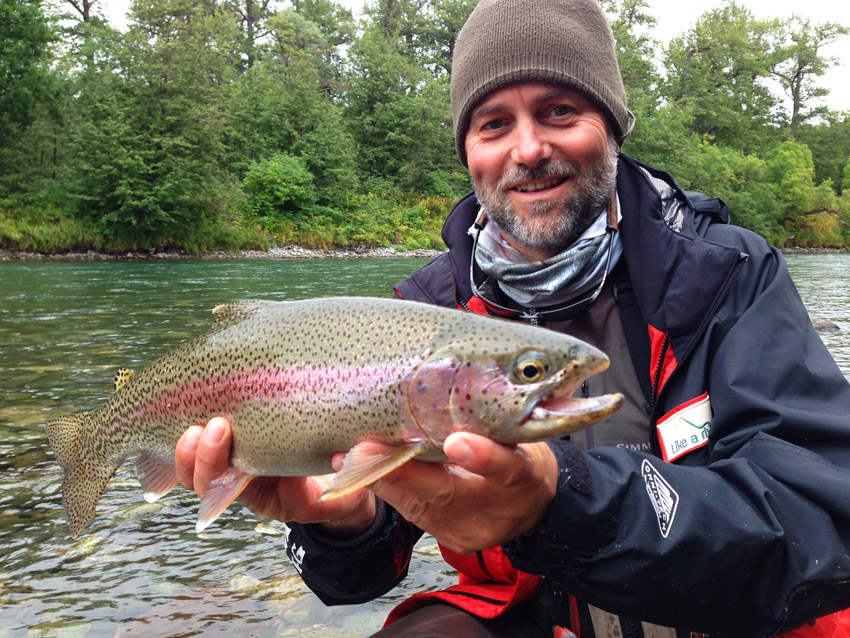

   Accommodation is possible as in the city of Murmansk as straight on the bank of Kitza in the hotel called 'Mokraya Kitza' http://mokraya-kica.ru. Comfortable rooms, heating, shower, toilet etc. True Russian sauna always ready to warm you up after a long day of fishing. Polite and caring staff will do their best to make sure you enjoy your stay. 

http://chavanga.com/
https://www.facebook.com/chavanga?fref=ts

Dear Rafal!  Thanks a lot for your nice fish!!!


fang von lachs in Russland, Kola Peninsula salmon tours. fang von lachs in Russland, lov lososu v Rusku, peche au saumon Russie,